If you just found a shoebox of baseball cards from your childhood, you do not need to decide anything today. You need a clean table, a free weekend afternoon and a loose plan. This guide covers sorting, protecting and understanding what you found. It also covers how to start a small, affordable collection around one team, which is a good way of getting back into baseball card collecting after years away.
Start with the shoebox: a first-hour sort
Clear a table and cover it with a towel or a soft tablecloth so cards never slide against a hard surface. Wash your hands first, because oils and dirt mark card surfaces. Then open the box and take a moment to look before you sort anything.
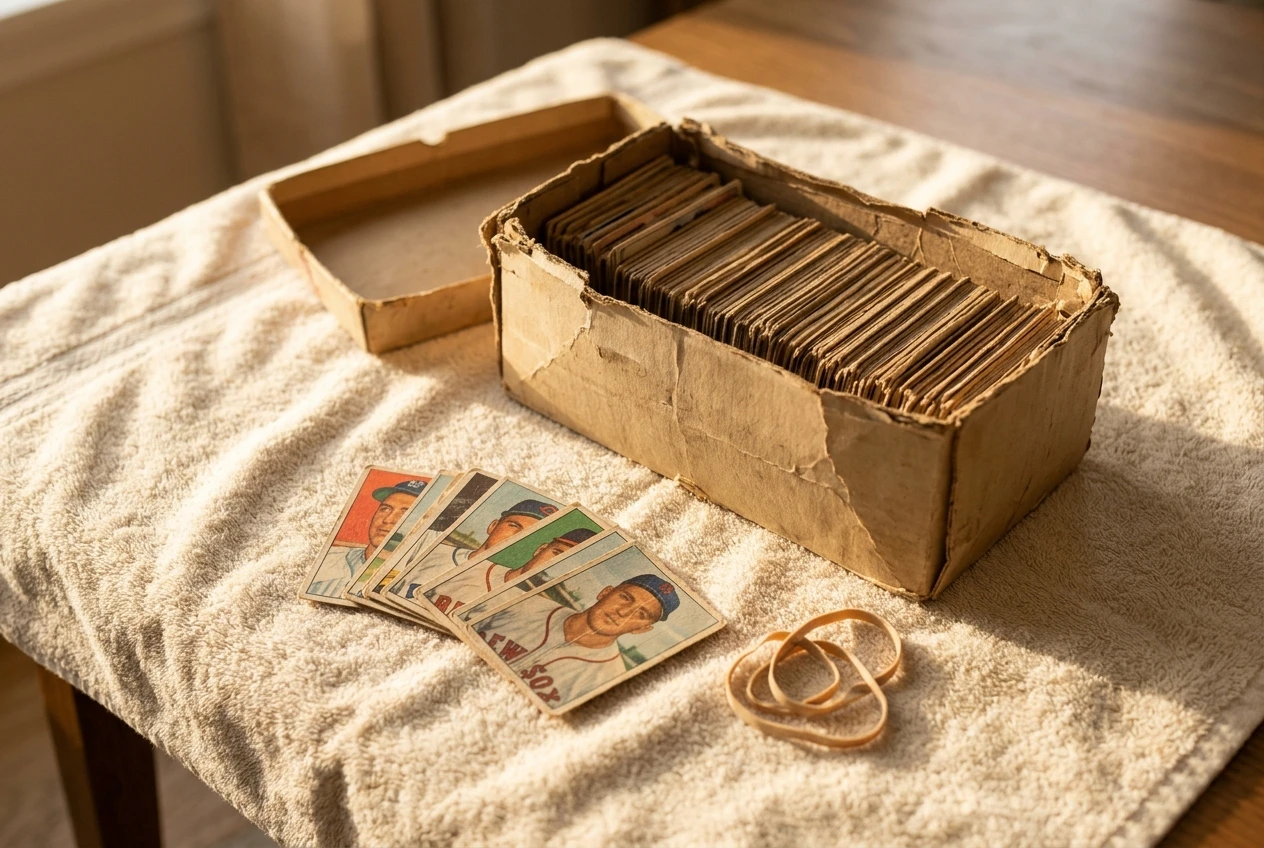
If cards are bundled with rubber bands, slide the bands off slowly. Rubber bands dent edges and leave grooves across the card face, and old ones can stick. Do not scrape off gum residue or wipe cards with a cloth or cleaner. Rubbing usually does more damage than the stain did.
Make your first pass by team. A pile for each club is the easiest way to see what you actually have, and it points you toward the team you might collect now.
Then split each team pile by year. The copyright year is printed in small type on the back, and the set name is usually there too. Cards from the same year and brand belong together.
Last, make a quick condition call on each card, looking at four things:
- Corners: sharp points are best, rounded or fuzzy ones show wear.
- Edges: look for chipping, especially on cards with dark borders.
- Surface: check for scratches, creases, stains and print dots or lines.
- Centering: the border should be about even on all sides.
Do not agonize over grades at this stage. Three piles are enough: cards in good shape, cards with obvious wear, and cards you simply love no matter what they look like. Set that last pile aside. Those are the ones you will end up pulling out for friends.
Protect what you found: sleeves, top loaders and boxes
Once the cards are sorted, give them a safe place to sit. Each type of holder does a different job, so it helps to know what you are buying.
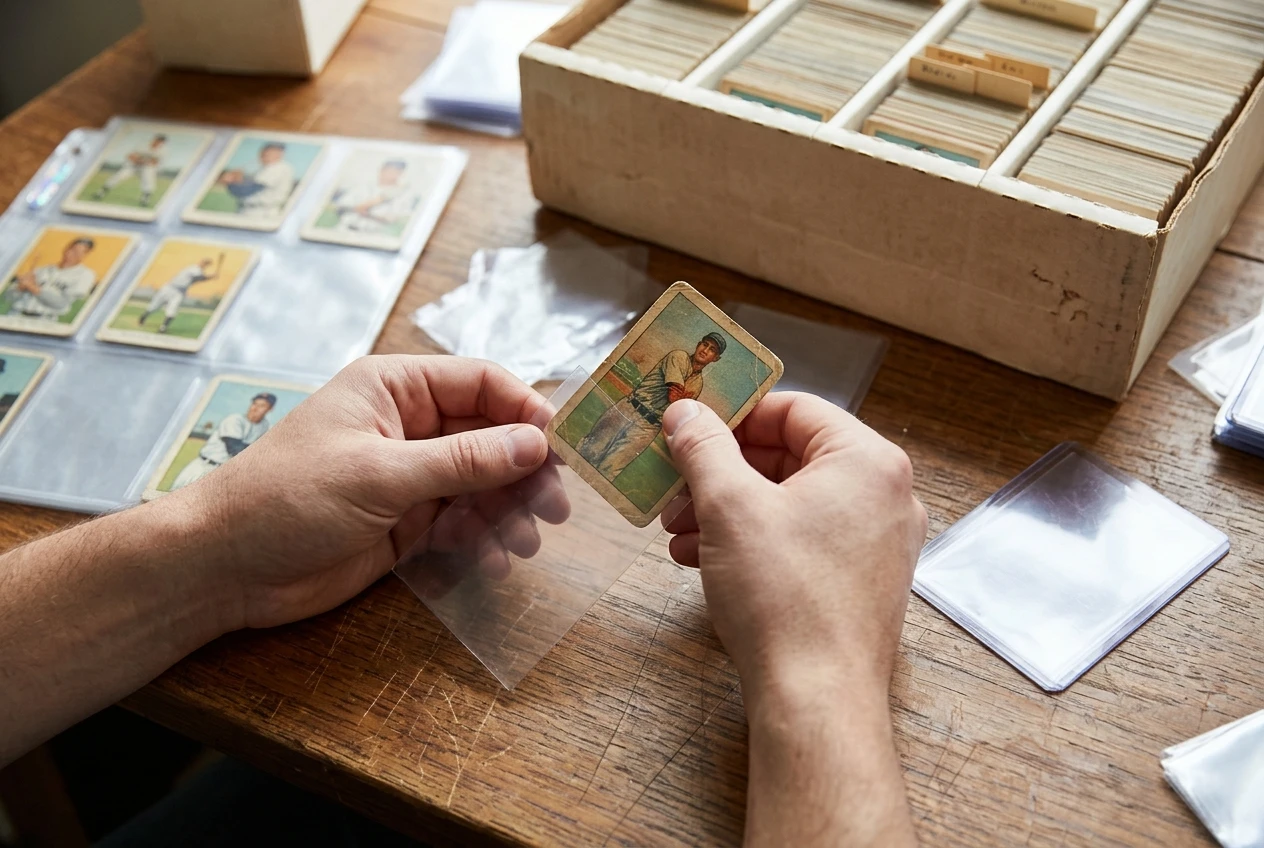
- Penny sleeves: thin, soft plastic sleeves that protect the surface and edges from scuffs. Nearly every card you want to keep should go in one.
- Top loaders: rigid plastic holders, about 3 by 4 inches, that fit a standard card (2.5 by 3.5 inches) after it is in a sleeve. Use them for favorites, rookies and anything you might display or ship.
- Semi-rigid holders: flexible, firm plastic holders that are easier to open and close than top loaders. Collectors commonly use them for cards they plan to send to a grading company.
- Storage boxes: cardboard boxes made to hold hundreds of cards in rows. These are the right home for the bulk of your collection.
- Binder pages: nine-pocket pages work well for sets and team collections you want to flip through. Look for pages labeled safe for cards, since some cheap plastics can harm them over time.
A good routine is to slide the card into a penny sleeve, then into a top loader if it earns one, and then file it in a box by team and year. Thicker cards, such as those with a piece of jersey embedded in them, need holders made for thicker cards. Forcing them into a standard one can damage the edges.
Where you keep the boxes matters as much as what holds the cards. Heat, humidity and sunlight cause warping, fading and sticking, so attics, garages and damp basements are poor choices. A closet shelf in a room with steady temperatures is better.
Don’t guess at value: how to look up your cards
It is tempting to start searching for treasure right away. Slow down first, because the way most people look up value leads them astray.
Start by identifying each card you are curious about. You need the year, the brand or set name, the player and the card number, all of which are on the back. The front may add details such as a logo that marks a rookie card.
Then check what similar cards have actually sold for. Online marketplaces let you filter listings to completed or sold items, and those results are far more useful than asking prices. Anyone can ask for any amount, but a sold listing shows what a buyer was willing to pay. Compare cards in similar condition, because a worn card and a sharp one with the same name can sell for very different amounts.
For now, set a few things aside:
- Old price guide numbers from memory: the values you remember from years ago do not carry over.
- Asking prices: treat them as wishes, not facts.
- Selling plans: wait until you have finished sorting and know what you want to keep.
Be aware that many cards printed from the late 1980s through the mid 1990s were produced in enormous quantities, and collectors often call that stretch the junk wax era. A box full of those cards is probably worth more as a memory than as an investment. That is fine, since the goal here is enjoying the hobby. If a few of your cards turn out to be worth real money, treat that as a bonus.
What changed while you were gone
The hobby has picked up new vocabulary, and a few terms explain most of what looks unfamiliar on a shelf today.
Grading
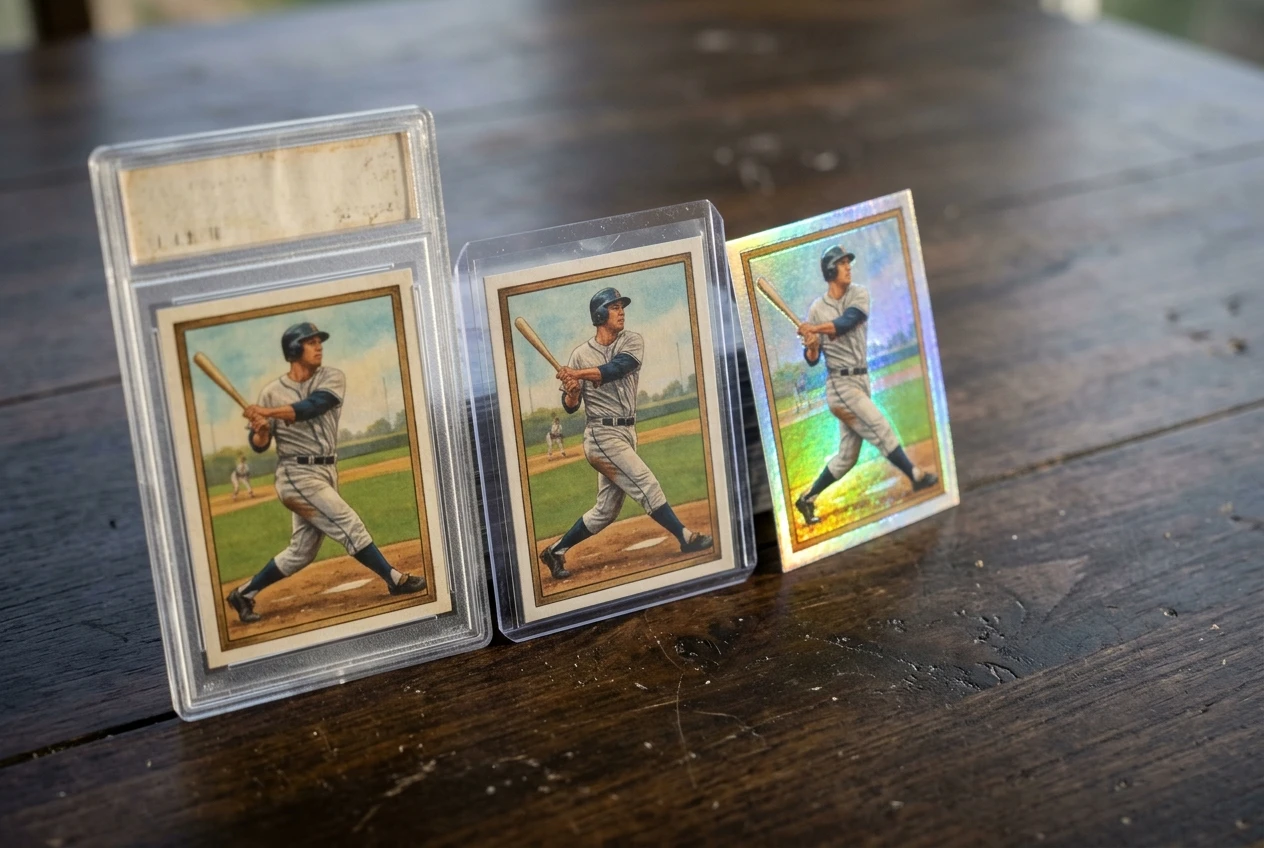
Professional grading companies, including PSA, Beckett and SGC, inspect a card, score its condition, usually on a scale of 1 to 10, and seal it in a hard plastic case, often called a slab. A high grade can raise what a buyer will pay, and buyers like knowing a third party checked the condition. Grading costs money and takes time, and you do not need it to enjoy your cards. Most casual collectors never grade anything.
Parallels, inserts and numbering
A parallel is a version of a regular card with the same photo but a different color, finish or pattern. Parallels are usually harder to find than the base version. Some are numbered, which means a stamp on the card shows how many copies exist, such as 17 out of 99.
An insert is a card from a special subset inside a product, with its own design. Autograph cards and memorabilia cards (called relics, with a swatch of a jersey or bat) are the other big categories you will see.
How cards are sold now
Packs, boxes and blasters still exist. Hobby boxes are generally sold through card shops and are aimed at collectors, while retail products show up in big-box stores. You will also see group breaks, where people split a sealed box online and each buyer gets the cards for a team they paid for. Breaks are a way to get your team’s cards without buying a whole box, but treat them as entertainment and set a limit.
For a returning collector, the most useful change is how easy it is to buy single cards. You can pick the exact card you want instead of hoping to find it in a pack.
Pick your team and set a small budget
A team-based collection gives you a finish line, which helps when the hobby feels huge. Pick the team you cheered for as a kid, the one near where you live now, or whichever pile in your shoebox was biggest. Whichever it is, your sorted cards already give you a head start.
Next, narrow the scope even further. You could collect:
- every card of one player across different years
- one team from one era, such as the years you watched most closely
- a single set, aiming to finish it
- a favorite design, regardless of player
Then decide how much you will spend each month, and treat that amount as fixed. A good number is one you would not miss, such as what you would spend on an evening out. Set it before you shop and the hobby stays a pleasure instead of a source of regret.
Singles are the stretch-your-money option. A pack is a gamble, but a single card is a known quantity. Look at common cards, older cards in average condition and players who are not stars. Those are often the cheapest ways to fill a team binder, and a well-worn card of a player you love displays just as nicely as a pristine one.
Where to shop as a returning collector
Each place to buy suits a different kind of collector.
- Local card shops: the staff can help you catch up on terms, point out what is current and often sell bargain bins where you can dig for team cards at low prices. Shops are also a good way to meet other collectors.
- Card shows: tables from many dealers in one room make it easy to compare prices and haggle politely. Bring your want list so you can check it against what dealers have in their boxes.
- Online marketplaces: these give you the widest choice of singles for your team. Look at the seller’s feedback, check that the photos show the actual card and not a stock image, and read the return policy before you buy.
Take extra care with expensive vintage cards. Reprints and altered cards exist, so buy those from sellers with a solid reputation, and consider a graded card if the price is high. For ordinary team cards that cost little, the risk is small.
A simple routine that keeps collecting fun
Collecting lasts when it fits into a regular habit. A few small practices keep it manageable.
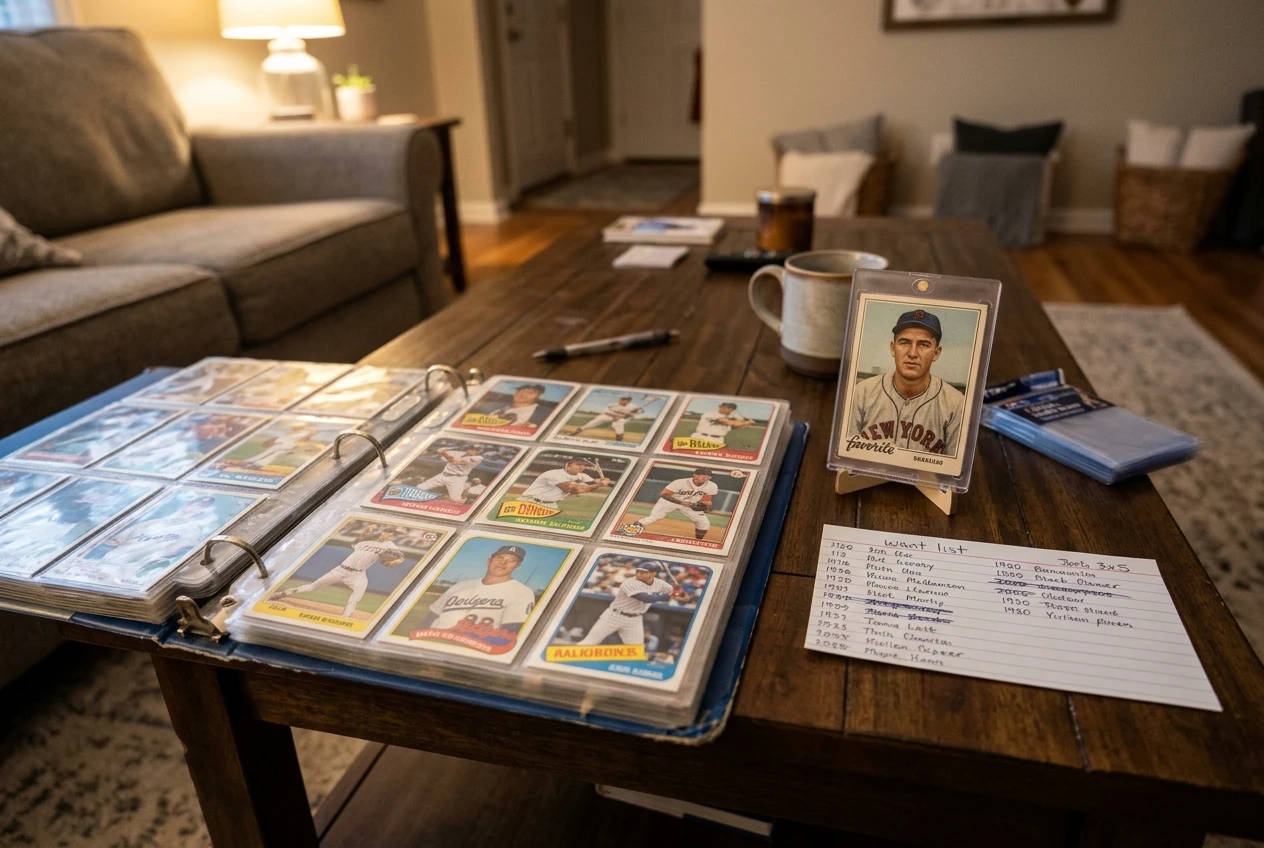
Display something. Put your favorite card in a magnetic holder or a small frame where you will see it. A binder of your team’s cards on the coffee table gets picked up by visitors more often than you might expect.
Trade. Duplicates and cards outside your collection are currency. Friends, family members who collect and other fans at a shop can all be trading partners. Even trades that swap one card for another of equal value are enjoyable, and they cost nothing.
Keep a want list. Write down the players, years and cards you are looking for, in a notes app, a spreadsheet or on an index card in your wallet. A list keeps you from buying cards you already own and turns a browsing session at a show into a search with a purpose. Mark them off as you find them.
Set a regular time. Choose a weekend morning once a month to sort new arrivals, update the list and put cards in sleeves and boxes. Having a slot for it keeps the pile from growing into a mess.
Before you do any more sorting, get the cards into proper holders. Our guide to starter card supplies covers sleeves, top loaders and storage boxes, so you can protect your shoebox finds before you go any further.