Do you remember opening a pack of baseball cards, searching for your favorite players and carefully organizing your collection by team? Perhaps you remember trading cards with friends or visiting your local card shop to find that one card missing from your collection.
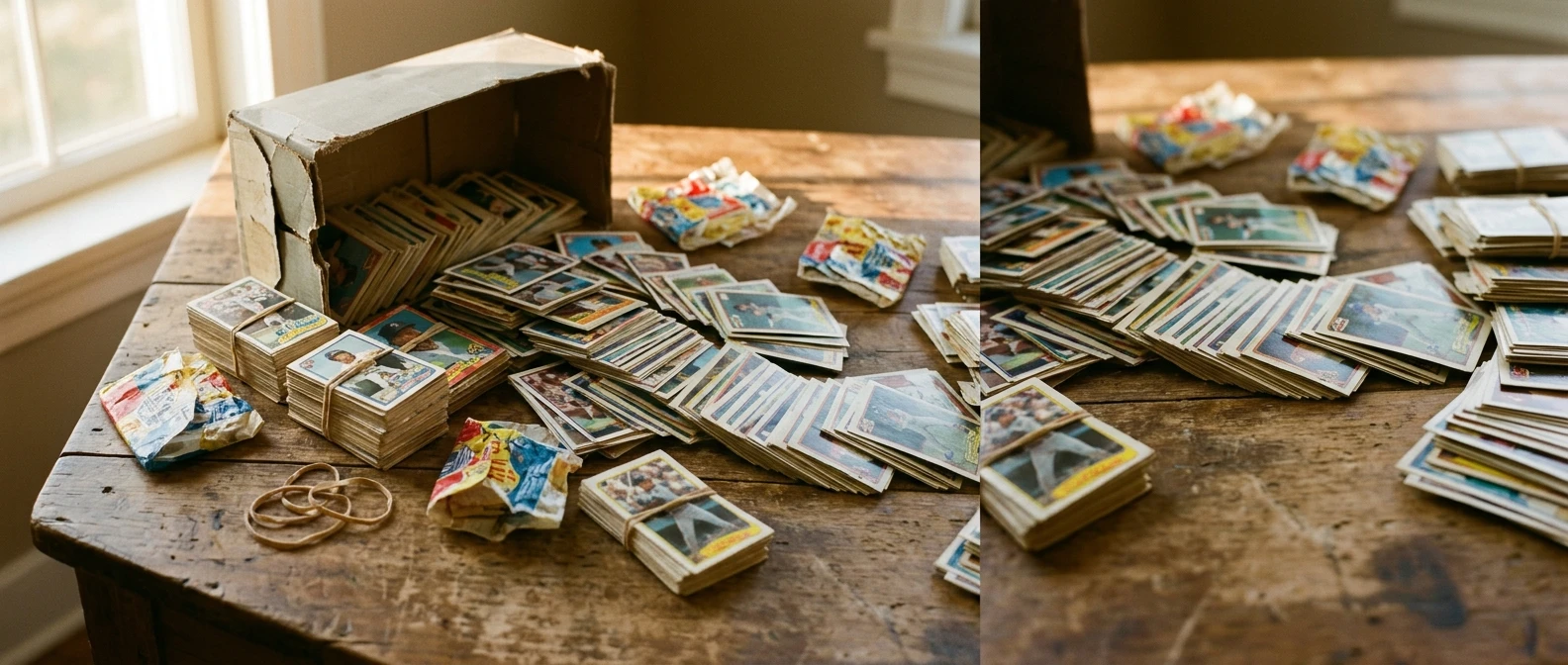
If you are returning to baseball card collecting after years or even decades away, you may be surprised by how much the hobby has changed.
Today’s baseball card market includes rookie cards, autographs, refractors, numbered parallels, memorabilia cards and an assortment of products that can be overwhelming to a returning collector.
However, one thing hasn’t changed: baseball card collecting can still be an enjoyable and rewarding hobby without spending a fortune.
This guide will help you understand today’s baseball card collecting landscape and get started building a collection that is meaningful to you.
How Baseball Card Collecting Has Changed Over the Years
For many of us who collected baseball cards during the 1970s, 1980s and 1990s, collecting was relatively straightforward. We purchased packs, collected our favorite players and teams, traded duplicates and occasionally attempted to complete an entire set.
Manufacturers such as Topps, Donruss, Fleer, Score and Upper Deck provided plenty of options. While certain cards were more desirable than others, collecting was often more about the players than the potential financial value of the cards.
Today’s hobby is considerably different.
Some of the biggest changes include:
- A greater variety of products and card designs.
- Increased emphasis on rookie and prospect cards.
- Limited-production cards with serial numbers.
- Autographed and memorabilia cards.
- Professional card grading.
- Online marketplaces for buying and selling individual cards.
- Box breaks and other group collecting experiences.
Social media and online marketplaces have also made it easier to follow card values, discover new products and connect with other collectors.
While some people approach baseball cards as an investment, you don’t have to follow that path. There is still plenty of room for traditional collectors who simply enjoy baseball and collecting their favorite players.
Understanding Today’s Baseball Card Brands
One of the first things returning collectors will notice is the number of different baseball card products available.
Topps remains the centerpiece of officially licensed MLB baseball card collecting. Bowman, which is part of the Topps product family, is particularly popular among collectors interested in minor league prospects.
Here are several product lines worth becoming familiar with.
Topps Series 1, Series 2 and Update Series
Often referred to as flagship Topps, these products represent the traditional baseball card collecting experience.
Series 1 and Series 2 feature a broad selection of major league players, while Update Series typically includes additional rookies, players who have changed teams and cards reflecting developments during the season.
These products are an excellent starting point for collectors who want to build team sets, collect favorite players or complete an entire annual set.
Topps Chrome
Topps Chrome features cards with a shiny chromium finish and typically includes a more concentrated selection of players than the flagship sets.
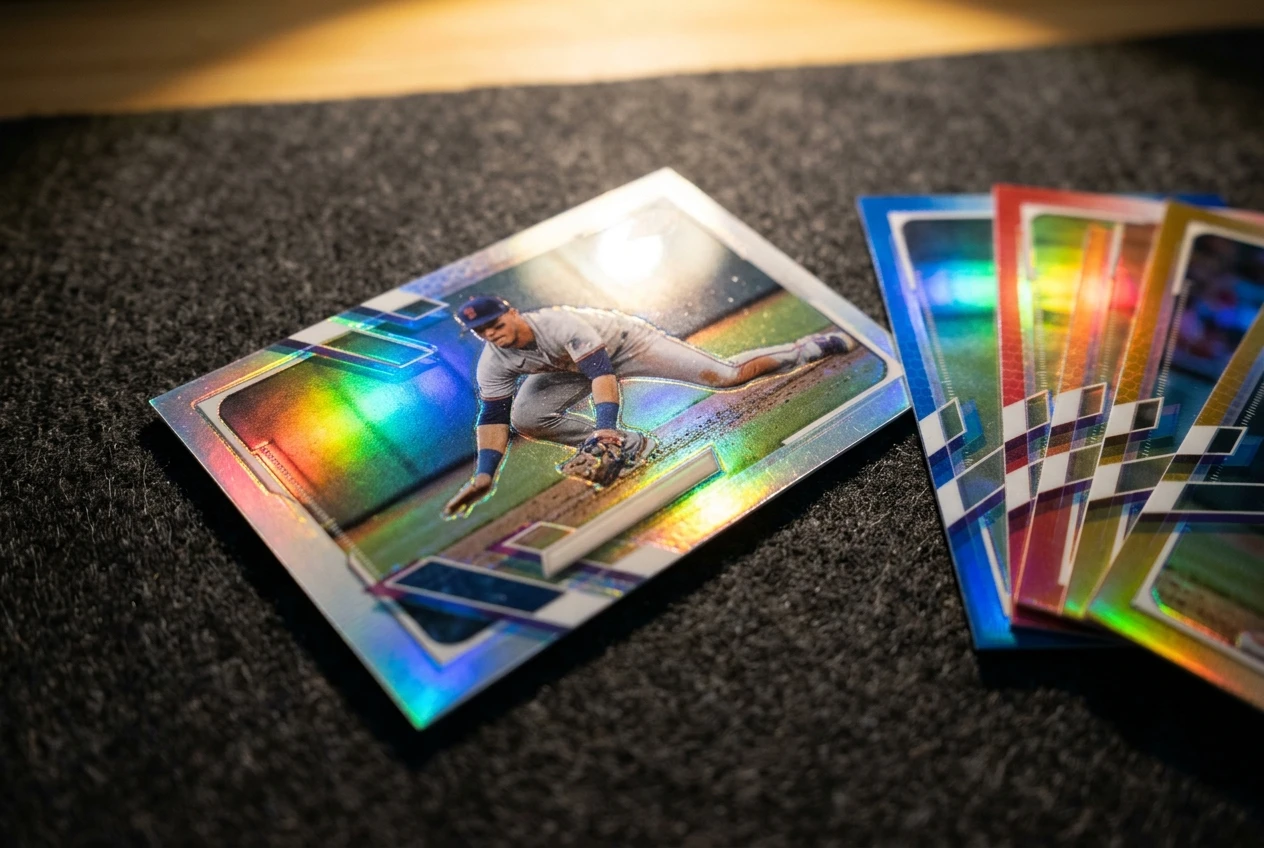
Chrome products are particularly popular for rookie cards, refractors and colored parallels.
While packs and boxes are generally more expensive than standard Topps products, Chrome cards offer an attractive alternative for collectors who appreciate their appearance.
Bowman
Bowman is one of the most important product lines for collectors interested in following baseball’s future stars.
Bowman products feature established major league players, rookies and prospects who may still be several years away from reaching the major leagues.
A card displaying the 1st Bowman designation is particularly desirable to many prospect collectors because it identifies a player’s first designated Bowman prospect card.
Collecting Bowman cards provides an opportunity to follow a player’s development from the minor leagues through his eventual major league debut.
Topps Heritage
Topps Heritage celebrates the history of baseball cards by incorporating designs inspired by older Topps sets.
For collectors who appreciate the appearance of cards from their childhood, Heritage offers a combination of nostalgia and modern baseball.
Topps Stadium Club
Stadium Club is known for its outstanding photography.
Rather than relying heavily on traditional card borders and graphics, Stadium Club places greater emphasis on action photographs, candid moments and unique images of baseball players.
If you appreciate photography as much as collecting, Stadium Club is a product worth exploring.
Comparing Popular Baseball Card Products
Product | Primary Collecting Appeal | Relative Cost |
|---|---|---|
Topps Series 1 and 2 | Traditional collecting and team sets | Lower |
Topps Update | Rookies and roster changes | Lower |
Topps Chrome | Refractors and premium rookie cards | Moderate to high |
Bowman | Prospects and future stars | Moderate |
Bowman Chrome | Premium prospect cards | Moderate to high |
Topps Heritage | Nostalgia and vintage designs | Lower to moderate |
Stadium Club | Exceptional baseball photography | Moderate |
Prices, configurations and availability vary by release. You don’t need to collect every product. Start with one or two that appeal to your personal collecting interests.
Retail Boxes Versus Hobby Boxes
Another significant change in baseball card collecting is the variety of ways cards are packaged and sold.
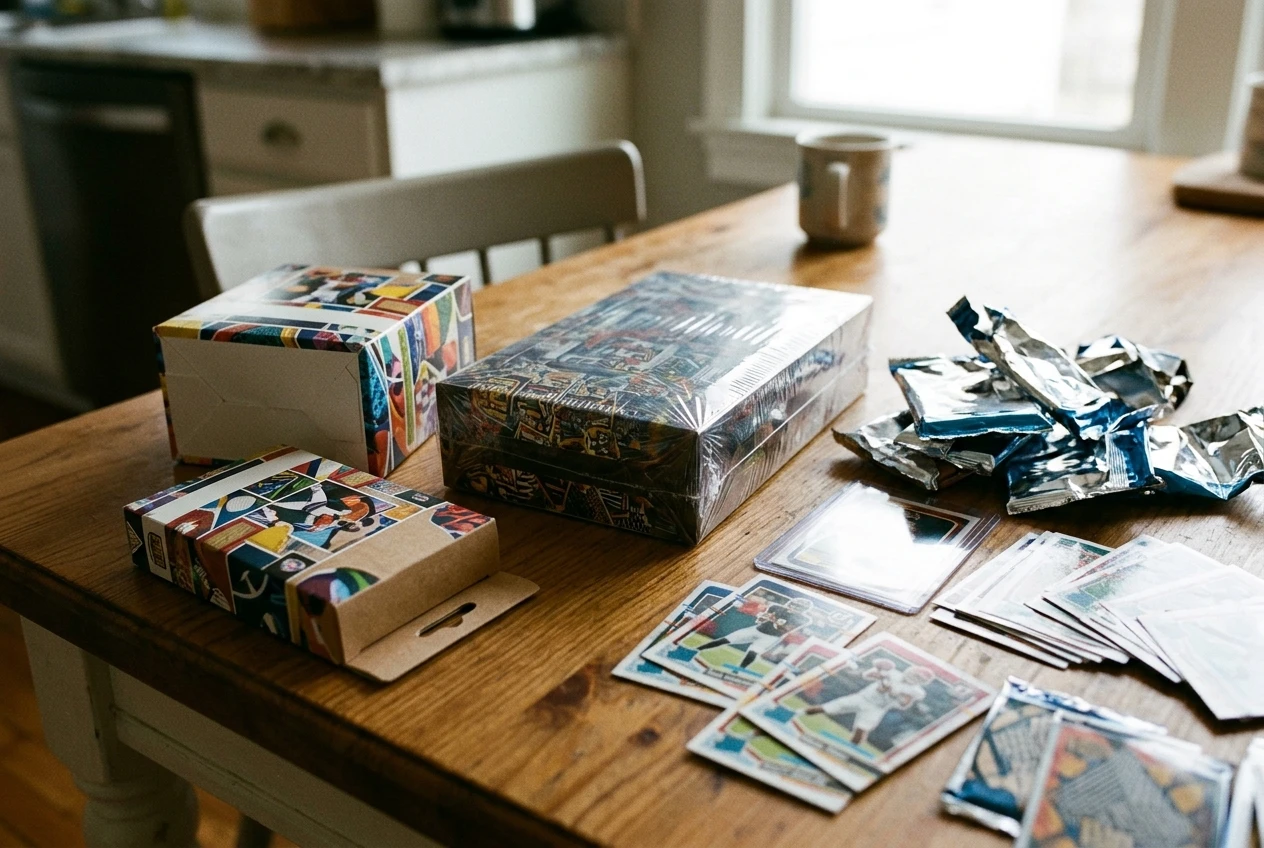
Understanding the differences between retail and hobby products can help you make better purchasing decisions.
Retail Boxes
Retail products are commonly available through stores such as Target, Walmart and online retailers.
Common retail formats include:
- Individual packs
- Value packs
- Blaster boxes
- Hanger boxes
- Mega boxes
Blaster boxes are a popular choice for casual collectors because they provide several packs at a relatively affordable price.
Retail products may contain exclusive parallels, inserts and occasionally autographs or memorabilia cards.
For collectors who simply enjoy opening packs and discovering which players they receive, retail boxes can provide plenty of entertainment.
Hobby Boxes
Hobby boxes are generally available through local card shops, online hobby retailers and manufacturers.
They often contain exclusive cards, different pack configurations and better opportunities to obtain certain premium cards. Some hobby products include advertised guarantees for autographs or memorabilia cards, although these guarantees vary by product.
Hobby boxes can be considerably more expensive than retail products.
Feature | Retail Boxes | Hobby Boxes |
|---|---|---|
Purchase price | Generally lower | Generally higher |
Availability | Major retailers and online | Card shops and online retailers |
Autograph opportunities | Varies by product | Often better, depending on product |
Exclusive parallels | Available in some products | Available in some products |
Best suited for | Casual and budget-conscious collectors | Collectors seeking premium cards |
Always review the specific product configuration and published odds before making a purchase.
What About Buying Individual Cards?
Purchasing unopened packs is exciting, but buying individual cards is often the most economical way to build a specific collection.
If your goal is to collect every Minnesota Twins player from a particular set, purchasing those individual cards may cost considerably less than opening multiple boxes and hoping to find them.
Online marketplaces, local card shops and card shows are excellent places to search for individual cards.
A combination of opening occasional boxes and purchasing individual cards can provide both entertainment and collecting efficiency.
Understanding Parallels, Inserts and Numbered Cards
Returning collectors may find some of today’s baseball card terminology confusing.
Understanding a few basic terms will make it easier to navigate the hobby.
Base Cards
Base cards make up the primary checklist of a baseball card set.
These are the traditional cards featuring players, photographs and statistics. They are generally the most common cards within a product and are ideal for building team sets and complete collections.
Parallel Cards
A parallel is an alternative version of a base card.
It typically features the same player, photograph and card number but includes a different color, border, finish or design element.
Examples include:
- Gold parallels
- Blue parallels
- Green parallels
- Red parallels
- Rainbow foil parallels
Some parallels are relatively common, while others are produced in very limited quantities.
Refractors
Refractors are cards featuring a reflective surface that produces a rainbow-like effect when exposed to light.
They are commonly associated with Topps Chrome and Bowman Chrome products.
Collectors often enjoy refractors because of their distinctive appearance and the variety of colors available.
Insert Cards
Insert cards are separate subsets included within a baseball card product.
They may recognize outstanding performances, celebrate baseball history, highlight emerging stars or feature unique designs.
Unlike parallels, inserts generally have their own designs and checklists.
Serial-Numbered Cards
Some baseball cards are produced in limited quantities and individually numbered.
For example, a card stamped 025/199 indicates that it is individually numbered 25 out of a stated production run of 199 cards for that version.
Common serial-numbered quantities include:
- /499
- /299
- /199
- /99
- /50
- /25
- /10
- /5
- 1/1
A 1/1 card represents a version produced as a single numbered copy.
While lower-numbered cards are generally scarcer, scarcity alone does not guarantee that a card will be valuable. Player popularity, performance, condition and collector demand also influence value.
Rookie Cards and Prospect Cards
A rookie card and a prospect card are not necessarily the same thing.
Bowman prospect cards may feature players who have not yet appeared in a major league game.
Officially designated MLB rookie cards typically display the RC logo and are issued according to the applicable rookie card eligibility rules.
Understanding this distinction is particularly important if you enjoy following young players throughout their careers.
Establishing a Baseball Card Collecting Budget
One of the easiest mistakes returning collectors can make is spending too much money during their initial excitement about rediscovering the hobby.
With new products being released throughout the year, there is always something else available to purchase.
Establishing a monthly collecting budget allows you to enjoy the hobby without creating unnecessary financial stress.
A $50 Monthly Collecting Budget
Here is an example of how an everyday collector might allocate a modest monthly budget.
Collecting Expense | Monthly Budget |
|---|---|
Unopened packs or retail products | $25 |
Individual cards | $15 |
Storage and collecting supplies | $5 |
Savings for future purchases | $5 |
Total | $50 |
You could adjust these amounts depending on your collecting priorities.
Some months you might skip purchasing unopened packs altogether and concentrate on completing a team set. Other months you might save your entire budget toward a particular card or hobby box.
Remember to include shipping costs and applicable sales taxes when purchasing cards online.
The important thing is to establish a budget that allows you to enjoy collecting without feeling pressured to continually purchase new products.
Baseball card collecting should be a source of enjoyment, not financial stress.
Deciding What Baseball Cards to Collect
One of the most important questions to ask yourself when returning to the hobby is:
What do I actually want to collect?
Without a collecting objective, it is easy to accumulate hundreds or thousands of cards that have little personal meaning.
Fortunately, there are numerous ways to build an enjoyable baseball card collection.
Collect Your Favorite Team
Team collecting is one of the simplest and most rewarding approaches to the hobby.
You might collect:
- Current players
- Former franchise stars
- Team rookie cards
- Minor league prospects
- Annual team sets
- Championship teams
Whether you are a Minnesota Twins fan, a Colorado Rockies fan or a supporter of another franchise, team collecting provides a natural connection between your love of baseball and your card collection.
Collect Your Favorite Players
Player collecting allows you to concentrate on one or several players whose careers you enjoy following.
You might collect their rookie cards, cards from each season of their careers or cards from different manufacturers and product lines.
You don’t need to own every card ever produced of a particular player to build a meaningful player collection.
Follow Baseball’s Top Prospects
Collecting prospect cards provides an opportunity to follow the development of young players before they reach the major leagues.
You can follow their progress through the minor leagues, monitor promotions and eventually add their major league rookie cards to your collection.
Part of the enjoyment comes from following the player’s journey rather than simply hoping his cards increase in value.
Collect Baseball History
Baseball cards can also provide a unique way to celebrate significant moments in baseball history.
One of my first goals when returning to baseball card collecting was to recreate the starting batting orders from Game 7 of the Minnesota Twins’ 1987 and 1991 World Series championships.
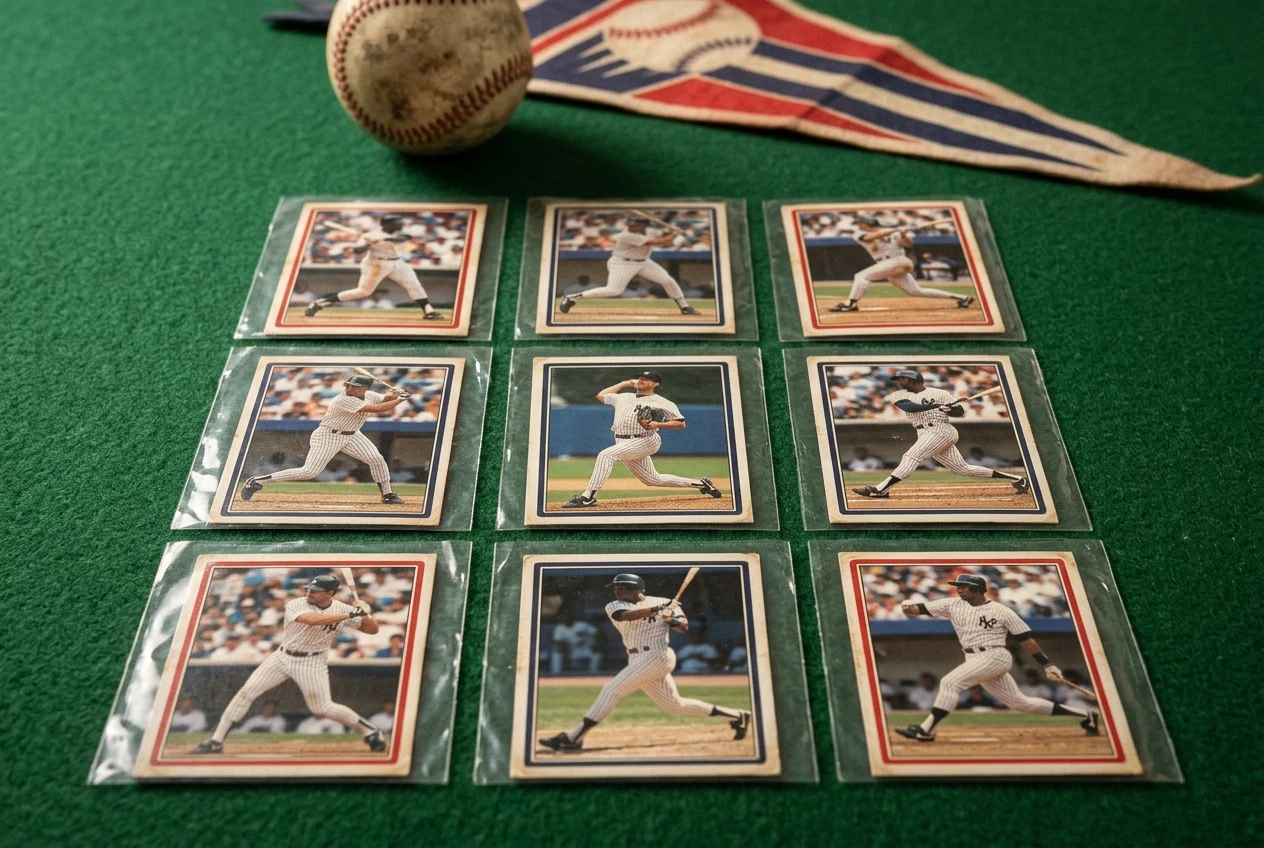
For each collection, I selected cards issued during the championship season and stayed with one card brand.
Completing those collections provided a sense of accomplishment and a personal connection to two of the greatest moments in Minnesota Twins history.
Other historical collecting projects might include:
- A franchise’s inaugural Opening Day lineup.
- The starting lineup of a World Series championship team.
- Players involved in a historic perfect game.
- Members of a franchise’s Hall of Fame.
- The starting lineup from the first major league game you attended.
These types of projects give your collection a purpose and allow you to combine baseball history with the enjoyment of collecting.
Complete a Baseball Card Set
Traditional set collecting remains an enjoyable option.
You might choose to complete an entire Topps Series 1 set, collect a particular Stadium Club release or assemble a vintage set from your childhood.
Completing a set provides a clearly defined goal and gives you something to search for when visiting card shops, attending card shows or browsing online marketplaces.
Avoiding Common Mistakes When Returning to Baseball Card Collecting
Rediscovering baseball card collecting can be exciting, but there are several common mistakes worth avoiding.
1. Trying to Collect Everything
There are simply too many products, players, parallels and inserts available to collect everything.
Establish a collecting focus and concentrate on the cards that provide the most enjoyment.
2. Buying Too Many Unopened Boxes
Opening packs is fun, but it is not always the most economical way to acquire specific cards.
If you are searching for a particular player or completing a team set, purchasing individual cards is often the better option.
3. Chasing the Next Valuable Rookie Card
Not every highly regarded prospect becomes a major league superstar.
Player development is unpredictable, and baseball card values can fluctuate considerably.
Collect players you enjoy following rather than relying on predictions of future financial value.
4. Confusing Asking Prices With Actual Card Values
A seller listing a baseball card for $100 does not necessarily mean the card is worth $100.
When researching card values, review recently completed sales of comparable cards rather than relying exclusively on current asking prices.
Make sure you are comparing the same card, parallel, condition and grading status.
5. Neglecting Card Storage
Proper storage helps protect your cards from unnecessary damage.
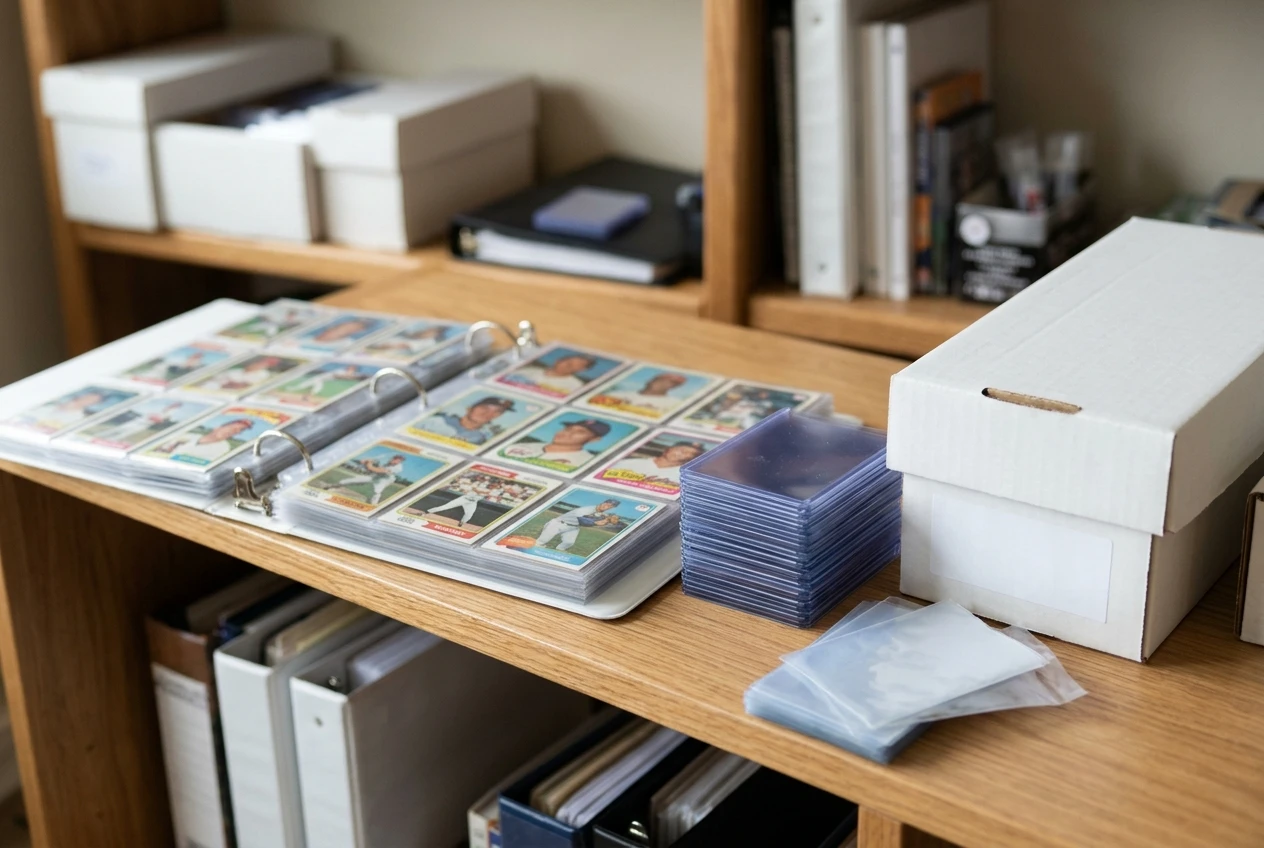
Basic collecting supplies include:
- Penny sleeves
- Top loaders
- Quality card binders
- Archival-safe nine-pocket pages
- Card storage boxes
You don’t need expensive storage solutions for every card, but protecting your collection from moisture, direct sunlight and excessive handling is important.
6. Assuming Every Card Should Be Professionally Graded
Professional grading has become a significant part of today’s hobby.
However, grading costs can exceed the value of many ordinary baseball cards.
Unless you have a particular reason to grade a card, there is nothing wrong with maintaining a collection of raw, ungraded cards.
7. Losing Sight of Why You Collect
Perhaps the biggest mistake is allowing the financial side of the hobby to overshadow the enjoyment of collecting.
You don’t need to own rare autographs, expensive rookie cards or highly graded vintage cards to be a successful collector.
A collection that reflects your favorite teams, players and baseball memories can be every bit as rewarding.
Frequently Asked Questions About Baseball Card Collecting
Is baseball card collecting still an affordable hobby?
Yes. Collecting base cards, purchasing individual cards and establishing a reasonable monthly budget can make baseball card collecting an affordable hobby.
What baseball cards should a returning collector buy first?
Topps flagship products are a good starting point for traditional collectors. Bowman is worth exploring if you enjoy following prospects, while Heritage and Stadium Club offer different collecting experiences.
Is it better to buy packs or individual baseball cards?
Opening packs provides entertainment and the excitement of discovering new cards. Purchasing individual cards is generally more efficient when building a specific collection.
Many collectors enjoy a combination of both approaches.
Do baseball cards need to be professionally graded?
No. Professional grading is optional. Many collectors prefer to keep their cards ungraded and store them in binders, protective sleeves or top loaders.
Can I make money collecting baseball cards?
It is possible to sell cards for more than their original purchase price, but card values are unpredictable. Collecting expenses, selling fees and shipping costs can also reduce potential profits.
Baseball card collecting is best approached as a hobby rather than a guaranteed investment opportunity.
Rediscovering the Joy of Baseball Card Collecting
Baseball card collecting has changed considerably over the years, but the reasons many of us began collecting remain the same.
We enjoy baseball. We have favorite teams and players. We appreciate the history of the game, and we enjoy the satisfaction of adding another card to our collection.
Whether you are collecting your favorite team’s current roster, following a promising young prospect, completing a vintage set or recreating a historic World Series lineup, your collection should reflect what you love about baseball.
Start with a reasonable budget, establish a collecting goal and take your time.
You don’t need the most expensive collection, the rarest cards or the largest collection to enjoy the hobby.
You simply need a collection that means something to you.
Collect what you love, enjoy the journey and let every card tell a story.